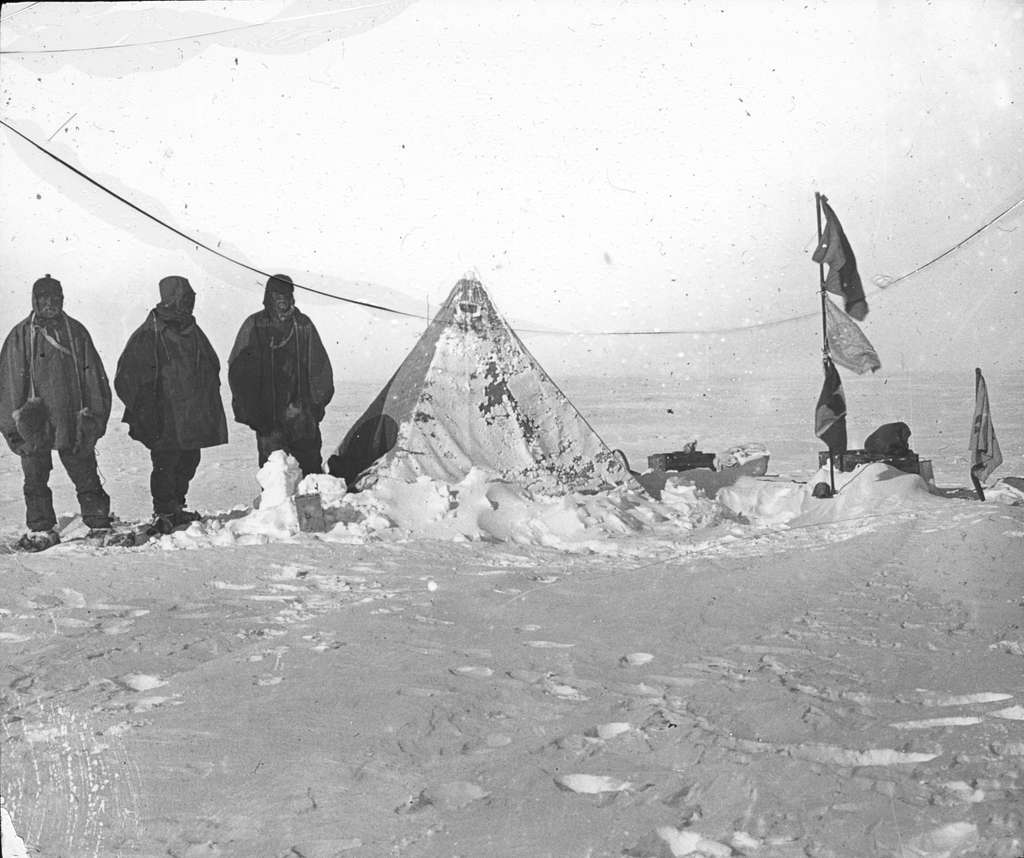
In 1914, Ernest Shackleton reportedly placed a recruitment advert that has since become the stuff of leadership legend: "Men wanted for hazardous journey. Small wages, bitter cold... safe return doubtful. Honour and glory in case of success."
Whether the advert is apocryphal or not, the result of his recruitment was very real. Shackleton’s Endurance expedition is not studied today because it reached the South Pole, it failed that objective entirely when its ship was crushed by pack ice. It is studied because, despite two years of isolation and extreme deprivation, Shackleton brought every single one of his twenty-eight men home alive.
He achieved this not through superior equipment, but through an intuitive mastery of his team’s informal network. He protected the exhausted, integrated the loners, and bridged the silos between sailors and scientists. Today, research from groups like the Connected Commons has validated Shackleton’s intuition. After surveying over 30,000 employees, researchers found that the best leaders focus on four specific network strategies rather than just conventional goal-setting.
Manage the Centre
Every team has a "centre"—the handful of people whom everyone consults and relies upon. These individuals are technically brilliant, personally liked, or simply hold the "unwritten" manual for how things work. While they are your most valuable assets, they are also your greatest flight risks.
The research is clear: these people are often overloaded in ways that don't appear on a formal HR dashboard. Their days are consumed by "quick questions," email introductions, and corridor problem-solving. Because this work is informal, it is often invisible and under-appreciated by the company.
Managing the centre requires looking at the network data to see who is actually drowning in demand. Effective leaders protect these people by redistributing collaborative requests and ensuring their "invisible" contributions are officially recognised. When Shackleton noticed his photographer, Frank Hurley, becoming dangerously obsessed with his glass-plate negatives during the ship’s sinking, he sat with him for hours to help him process the loss. He knew that Hurley’s mental state was central to the group’s morale, and he protected that centre at all costs.
Integrate the Edge
Every network also has a "periphery." These are people less connected to the core—perhaps because they are new, work remotely, or possess a highly niche expertise.
Being on the edge isn't always a problem, but it becomes one when it turns into isolation. The newcomer who hasn't built trust cannot do their job effectively. In our current era of hybrid working, this "peripheral problem" has become acute.
Top-performing leaders don't wait for people to find their own way into the inner circle. They provide "social scaffolding"—deliberate introductions and explicit inclusion in informal chats. They recognise that a team is only as strong as its most isolated member and work to ensure that information doesn't just "pool" in the middle but reaches the edges.
Minimise Silos
We talk about silos constantly, but we usually try to fix them with the wrong tools. We reorganise reporting lines or create cross-functional committees. These are formal fixes for an informal problem.
The research shows that the best teams don't try to break every silo. Instead, they identify the specific boundaries where a lack of connection is actually costing the business money or slowing down innovation. They build targeted bridges—perhaps between engineering and product, or senior leaders and juniors—rather than launching an ambitious, but vague, "culture programme."
Subgroups and cliques are natural; the goal isn't to eliminate them. It is to ensure these internal communities are connected enough that the team’s collective capability remains greater than the sum of its parts.
Build Agility
In a traditional sense, agility is about speed and process. In a network sense, agility is about the ability to rapidly connect the right expertise to a new problem, regardless of where those people sit on the org chart.
Genuinely agile organisations have informal networks that are diverse enough to reconfigure around a crisis without needing a formal restructure to give them permission. This requires two habits:
- Cultivating Diversity: Deliberately connecting people with different functions and perspectives before you need them.
- Pruning Connectivity: Actively removing the "collaboration tax"—the endless meetings and redundant processes that consume the bandwidth needed for real work.
The Bottom Line: Moving Beyond the Chart
Shackleton’s team survived because he was an exceptional network manager in conditions where the stakes of failure were immediate and catastrophic. In a modern office, the consequences of poor network management are slower and easier to ignore—the high performer who burns out, the new hire who never settles, the project that dies in the gap between two departments.
These losses are preventable. The habit of high performance reduces to four simple, regular questions:
Who is at our centre, and are they sustainable?
Who is at our periphery, and are they connected enough to contribute?
Which silos are costing us the most, and how can we bridge them?
Where is our bandwidth being wasted on the wrong things?
Shackleton couldn't stop the ice from crushing his ship. But he could stop the crisis from crushing his team. Your conditions are less extreme, but the principles remain the same: stop managing the org chart and start leading the network.