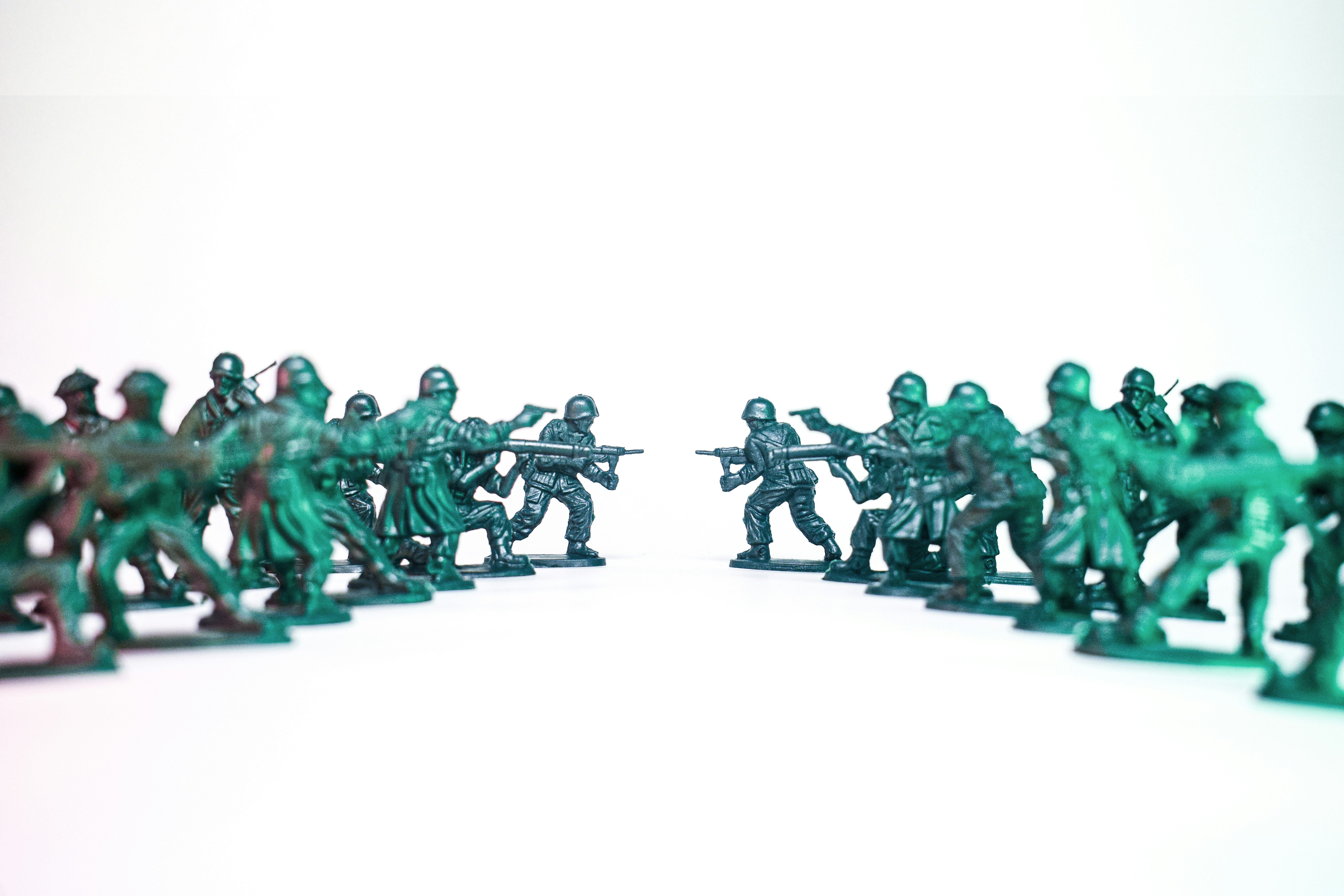
In 1943, the US military faced a logistical nightmare. They had to coordinate hundreds of thousands of people across multiple continents with a level of speed that traditional "command-and-control" hierarchies simply could not provide.
What they built, out of sheer necessity, was a network organisation. The planning for D-Day did not rely on a single rigid chain of command; it was an interlocking web of informal trust and lateral problem-solving. General Dwight Eisenhower’s greatest contribution was not his orders, but his ability to build relationships between disparate groups. When the landings hit conditions no one had planned for, the system held—not because the hierarchy was strong, but because the network was.
The Resilience Dividend
The companies that consistently outperform their peers during periods of disruption share a secret: they have built networks where resilience is distributed.
In these organisations, the emotional and cognitive resources needed for high performance are not concentrated in a few "heroic" leaders who are permanently on the verge of collapse. Instead, they are spread across a web of relationships that replenishes energy as much as it demands it.
This isn't an accident. It is the result of deliberate, seemingly small decisions:
- Defaulting meetings to 45 minutes to allow for cognitive recovery.
- Mapping the informal network before launching a change programme.
- Identifying the "Chloes" (the hidden influencers) before they burn out and leave.
- Treating connectivity as a managed asset rather than a background noise.
The Rise of the Synthesiser
The most effective modern leaders are "Synthesisers." They are the ones who can hold technology and human psychology in the same frame.
A Synthesiser knows that an AI strategy without a network strategy is just an efficiency play that will eventually create new forms of friction. They understand that most change programmes fail in the gap between the formal org chart and the informal reality of how work gets done. They recognise that their most valuable people are often the least visible, requiring new tools to identify and protect them.
Most importantly, they understand that "purpose" isn't found in a strategy deck. It is built in tiny, lateral moments: a conversation that catches a problem early, a connection across a silo that sparks an insight, or a manager who notices a colleague is running out of runway and steps in before they snap.
The Practical Starting Point
Every insight in this series leads to the same practical first step. Before you design your next restructure or deploy your next piece of software, do one thing:
Ask ten people who they go to when they need to navigate a roadblock.
The names that appear more than once are the people your organisation actually runs on. These individuals are either being supported by your current systems or are being slowly depleted by them. Until now, that was likely happening by accident. Moving forward, it must happen by design.
The org chart is a map, but it is not the territory. The network is the territory. If you want to build an organisation that genuinely works, you have to start leading the network you actually have, rather than the one you pretend to have.
The Bottom Line
Your business doesn't run on boxes and lines. It runs on trust, bandwidth, and connection. Stop managing the chart and start leading the network.